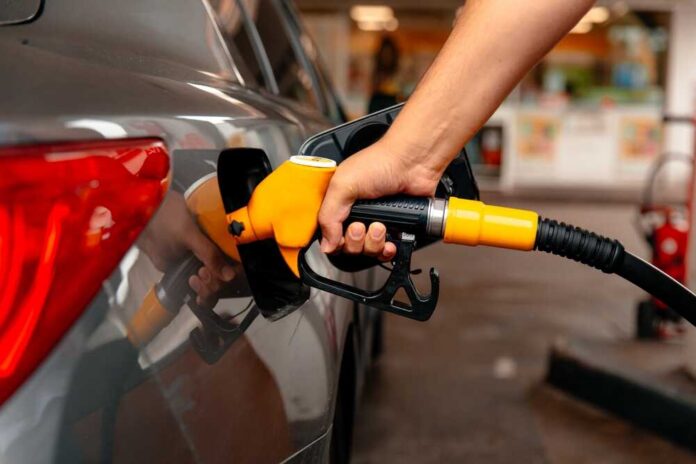
Gas prices have climbed back above $4 a gallon just as U.S. and Iranian attacks sharpened fears of a wider energy shock.
Quick Take
- The national average gasoline price returned to $4 on Monday, with AAA reporting that level and the Chicago Tribune repeating the same figure.
- Reuters said prices had already surged about $1.06 per gallon, or 36 percent, since the late-February strikes on Iran.
- Oil markets reacted fast, with shipping through the Strait of Hormuz badly disrupted and tanker traffic reduced to a near standstill in some reports.
- Not every price move can be blamed on war alone. Reuters also pointed to refinery outages as part of the climb.
What Changed at the Pump
The headline number matters because it hits drivers in the wallet, not just traders on a screen. AAA said the U.S. average reached $4 per gallon again, and multiple outlets reported the same broad milestone on July 20. That puts the issue in plain terms: a price once tied to crisis now looks like an everyday burden again.
The climb did not happen overnight. Reuters said gasoline prices had already risen by about $1.06 per gallon, or 36 percent, since U.S. and Israeli strikes on Iran began in late February. Another Reuters report said average pump prices reached $4.18 in late April, which shows the market had been under stress for weeks before this latest flare-up.
Why the Market Is Spooked
The Strait of Hormuz sits at the center of the story. CNBC reported that about one-fifth of the world’s oil supply passes through that narrow waterway, and it said attacks had cut tanker traffic and created the largest oil supply disruption in history. When that route looks unsafe, oil traders do not wait for facts to settle. They price in fear immediately.
That fear showed up in crude prices, too. Reuters said the conflict and shipping disruptions pushed oil higher, while other coverage noted a sharp jump in gas prices after military actions and retaliatory strikes.
In simple terms, crude oil is the raw material, gasoline is the finished product, and panic in the crude market usually reaches the pump with a delay that feels unfairly fast.
US gas prices hit an average of $4 a gallon again as the US and Iran launch attackshttps://t.co/tP2ftWAvCq
— ken crichlow (@ken_crichlow) July 20, 2026
The Counterpoint That Still Matters
The war story is strong, but it is not the whole story. Reuters also reported that refinery outages helped push pump prices near a four-year high. That matters because a refinery outage can tighten supply even when oil markets are already tense. The cleanest reading is not “war or refineries.” It is “war plus a strained supply chain.”
That distinction matters for anyone who wants a useful answer instead of a political slogan. If officials and commentators blame only Iran, they risk missing domestic weak spots that also raise costs.
If they blame only refineries, they ignore the obvious market shock from fighting in a region that moves a huge share of the world’s oil. The facts point to both pressure points working at once.
What Drivers Should Watch Next
The next few days will show whether $4 is a floor or just a spike. The key signals are simple: whether tanker traffic through the strait improves, whether crude prices cool, and whether refinery problems ease.
If shipping stays restricted, gasoline can stay high even if the fighting slows. If the route opens and crude retreats, pump prices should follow, though not instantly.
For consumers, the lesson is older than this war. Gas prices often move first on fear and only later on hard supply data. That is why one strong headline can change expectations long before the next fill-up. It is also why a single number, like $4 a gallon, can tell a bigger story than it seems to at first glance.
Sources:
apnews.com, cnbc.com, bostonglobe.com, aljazeera.com