Byron Donalds locked down Florida’s Republican nomination for governor and now stares across the November stage at David Jolly.
Story Snapshot
- Byron Donalds won the Republican primary for Florida governor, with a commanding lead over the field.
- David Jolly secured the Democratic nomination, setting a clear two-man race for November.
- Major outlets called the matchup quickly and consistently, reflecting a decisive result.
- Trump’s endorsement loomed large over the primary and frames the general election narrative.
Donalds wins big, and the board resets for November
Byron Donalds emerged from a crowded Republican field with about 48 percent of the vote as precincts neared full reporting, far ahead of his nearest challenger, and secured the party’s nomination to succeed term-limited Governor Ron DeSantis.
The Associated Press, The Washington Post, and other outlets called the race for Donalds on election night, treating the outcome as settled across the media map. The New York Times tracker also logged Donalds as the winner, with final tallies hovering around the same mark.
David Jolly, a former Republican congressman who moved to the Democratic side in recent years, won his party’s primary and now meets Donalds in a statewide test with national eyes watching. Florida’s political gravity guarantees attention, money, and turnout operations that dwarf most states.
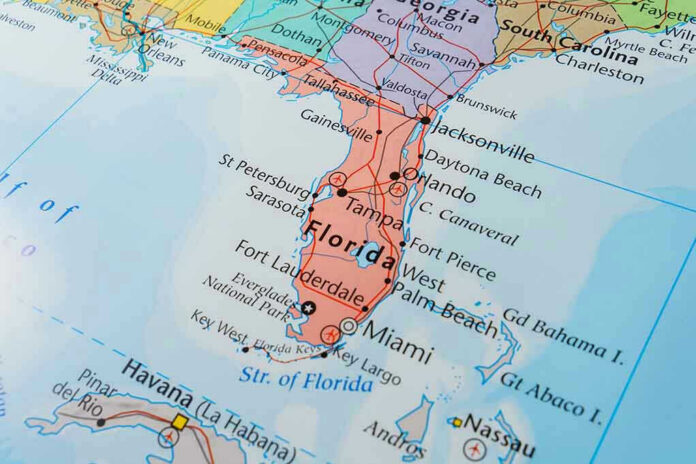
The general-election map starts with known Florida divides: booming suburbs along the Interstate 4 corridor, the red interior anchored by faith and small business, and coastal metros where turnout machines make or break statewide bids.
Trump’s nod and the efficiency of clear signals
Multiple reports identified Donalds as Trump-backed, and the endorsement fit a tested pattern in primaries: when voters face several similar choices, a clear signal moves votes and volunteer energy. Election-night coverage and live desk data showed a margin that matched a front-runner with air cover from the top of the party.
Research and past cycles suggest endorsements carry more weight in low-information primaries, which describes Florida’s large, noisy, and fast-moving statewide field.
Florida Republicans have spent a decade building a muscular turnout apparatus, and Donalds walked into that wind at his back. The margin spoke to message discipline and coalition math. Law-and-order themes and economic growth pitches often anchor the party’s statewide wins.
A Trump endorsement adds a lane to grassroots energy and small-dollar fundraising, which can turn a good night into a rout. That story matches the result boards many Floridians watched in real time.
Why this matchup matters to more than Florida
Donalds versus Jolly offers a clean contrast on policy and party identity. Donalds runs as a conservative with a focus on jobs, parental rights, and public safety.
Jolly positions as a center-left reformer with a bipartisan brand from his earlier time in the Republican Party. Voters will weigh school choice against union-backed models, tax restraint against new spending plans, and stricter crime policy against reform-first approaches that big blue counties often prefer.
9 AM Top-of-the-Hour News
They were chanting "Byron" at last night's victory celebration for Congressman Byron Donalds, who won the Republican primary for governor in Florida.: “My administration will be guided by 3 pillars making Florida accountable, achievable, and most of… pic.twitter.com/625LRvAaUL
— Worldwide News Network (@WorldwideNNX) August 19, 2026
Americans should view the primary as a stress test that Donalds passed. He won fast and wide, which signals a campaign that can scale in the fall.
The basics matter most now: protect the tax advantage, defend school choice, support police, and keep the cost of living from chewing up paychecks.
That frame tends to win in Florida if the nominee stays on message and out-hustles the opposition in early voting and election day turnout. The November map rewards clarity and energy.
What the numbers whisper about the path ahead
Live results pages showed Donalds clustering near 48 percent with roughly 810,000 votes when most precincts reported, while the nearest Republican trailed around the mid-20s, a gap that reflects both name strength and a split field.
The New York Times dashboard displayed similar vote totals and confirmed the call, reinforcing that the exact decimals mattered less than the scale of his lead. A brief caveat applies: outlets showed small differences in vote counts due to reporting windows, but the winner was never in doubt.
Jolly’s path relies on gains in college-educated suburbs, a surge in South Florida, and a turnout edge among younger voters in metros.
Donalds aims to lock down the Panhandle, run up scores in the southwest, break even or better in the Interstate 4 suburbs, and keep Miami-Dade within reach. Ground game decides close Florida races.
Message discipline decides blowouts. Given the primary shape, Republicans have the early efficiency edge; Democrats have room to grow but need flawless execution.
Sources:
cbsnews.com, washingtonpost.com, mynews13.com, tampabay.com, news4jax.com, cbs12.com