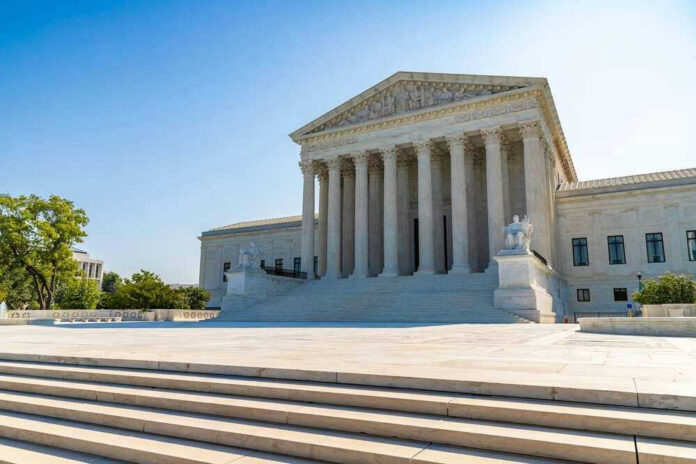
Chief Justice John Roberts kept hammers swinging on President Trump’s $400 million White House ballroom—at least for now—while the Supreme Court weighs an emergency appeal.
At a Glance
- Roberts allowed construction to continue temporarily during the Supreme Court’s review.
- Lower courts said the project needs Congress’s approval under federal property rules.
- The administration argues security needs justify moving ahead during appeals.
- Republicans are advancing a funding-and-authorization bill in Congress to settle it.
What Roberts Did And Why It Matters
Chief Justice Roberts did not decide the case. He issued a temporary order that lets work continue while the full Supreme Court considers the administration’s emergency request. That keeps the site active and avoids shutdown costs and delays while the legal fight plays out.
The order suggests the Court sees stakes worth urgent review, but it does not take a side on the core question: can a president build a new White House ballroom without Congress’s say-so?
Supreme Court chief justice allows work on Trump’s $400M White House ballroom to continue for nowhttps://t.co/4HBmPx7mKM
— Phil Stripling (@civex) August 21, 2026
The Trump administration asked the Supreme Court for this pause after a federal appeals court upheld an order to halt construction. Government lawyers argued that continued work protects security plans and preserves options during litigation.
They framed the ballroom as part of a modernization effort tied to protection missions at the White House. That pitch aims to show concrete, near-term harm from stopping work midstream, which can sway emergency relief even when the merits remain in dispute.
What Lower Courts Already Said
Two courts have said the law points the other way. A district judge first blocked the project, saying the president cannot replace the demolished East Wing with a 90,000‑square‑foot ballroom without Congress’s consent.
A divided appeals court agreed, stressing that Congress, not the executive, controls construction on federal property, including the White House complex. The panel underscored that major, permanent changes require clear legislative approval, not executive improvisation.
The National Trust for Historic Preservation led the suit. The group argued the administration skipped required public review and lacked legal authority for demolition and new construction. After the appeals ruling, the Trust repeated its stance bluntly: only Congress can authorize a White House ballroom.
The group has asked the Supreme Court to suspend work until lawmakers act or the Court resolves the legal question. Their filings keep the pressure squarely on the separation of powers, not aesthetics.
Congress Moves To Close The Gap
Republicans in Congress moved a bill to fund and authorize the project outright. Supporters point to security upgrades and continuity needs, pitch the ballroom as a hardened gathering space, and promise clarity after months of injunctions.
The legislation would provide the money and the green light that courts say the executive lacks. If passed, it would make the legal fight largely moot by supplying the missing approval that judges flagged from the start.
From a common‑sense view, Congress writing the rules and the checks is the cleanest path. Courts have warned that presidents are “temporary tenants,” not owners, when it comes to federal property.
If the project is about safety and mission, lawmakers can debate it, bargain on scope and cost, and then vote. That route respects the Constitution’s property clause lines, contains the budget, and avoids setting a precedent for unilateral, billion‑dollar makeovers by any future president.
What Comes Next At The Court
The Supreme Court will now decide whether to keep work going during the appeal and, if it takes the full case, how far executive power reaches over the White House grounds. A narrow ruling could focus on emergency factors only.
A broader ruling could draw a firmer map for future presidents on what counts as “maintenance” versus a structural overhaul that needs Congress. If Congress acts first, the Court may step back and let the new law control the outcome.
Taxpayers and staff will feel the result either way. Halting work wastes sunk costs and pushes back any security gains promised by the design. Charging ahead without a statutory anchor invites more lawsuits, higher risk, and a potential court‑ordered teardown.
The Roberts order buys time, but it also raises the price of delay. The fastest, most durable fix remains for Congress to speak clearly and for the executive to follow that lead, line by line, dollar by dollar.
Sources:
apnews.com, reuters.com, pbs.org