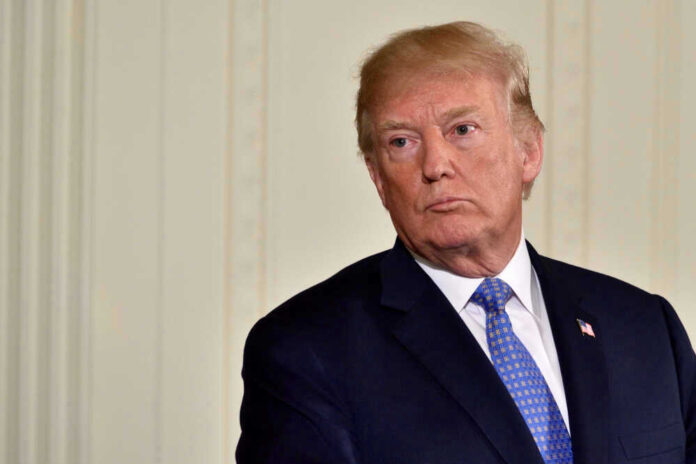
President Donald Trump’s threat to deploy the National Guard to Baltimore reignites the battle over the real story behind urban crime declines.
Story Highlights
- President Trump publicly challenges Governor Wes Moore, accusing Baltimore of being “out of control” despite record crime drops.
- Moore invites Trump to a public safety walk, aiming to highlight historic declines in Baltimore’s violent crime.
- Trump threatens federal intervention, citing recent National Guard deployments in other cities as models for action.
- Independent data confirms Baltimore’s crime rates are at multi-decade lows, yet violence is still rampant.
Trump and Moore Clash Over Baltimore’s Crime and Federal Intervention
President Donald Trump and Maryland Governor Wes Moore have escalated a high-profile dispute over Baltimore’s crime situation, drawing national attention to the city’s recent progress and the boundaries of federal authority.
Trump, now in his second term, accused Moore and local leaders of losing control over Baltimore, threatening to withhold federal support and send in the National Guard if improvements are not made.
Moore, defending his administration’s efforts, invited Trump to join a public safety walk in September to witness firsthand the significant reductions in violent crime that city officials say are the result of new community-focused strategies.
Baltimore has long been a flashpoint in debates over urban policy, crime, and government accountability. In the mid-2010s, the city was notorious for high homicide rates and persistent violence.
However, since 2020, under Mayor Brandon Scott and with the support of Governor Moore, Baltimore shifted toward a public health approach to crime—prioritizing prevention, community engagement, and social services alongside traditional policing.
This approach contributed to a record 23% drop in homicides in 2024 and continued progress through 2025, with the city’s homicide rate reaching its lowest point in decades.
Despite these improvements, Trump’s rhetoric frames Baltimore as a cautionary tale of failed Democratic leadership, challenging local claims and reigniting calls for federal involvement.
Baltimore’s Crime Data Contradicts Crisis Narrative
Crime statistics for Baltimore in 2025 paint a sharply different picture from the one Trump describes. According to the Baltimore Police Department’s 2025 Mid-Year Crime Report, gun violence has dropped 22%, and double-digit declines span all major crime categories.
Independent outlets such as WYPR and The Baltimore Sun corroborate these findings, reporting that as of mid-August, the city recorded only 87 homicides compared to 202 in 2024 and 262 in 2023.
April 2025 marked the lowest monthly homicide total since 1970. These numbers place Baltimore at the forefront of urban crime reduction efforts and challenge partisan narratives that ignore recent gains in favor of alarmist messaging.
Governor Moore and Mayor Scott have credited this progress to a comprehensive, community-based strategy—one that treats violence as a public health issue, not solely a law enforcement challenge. Their approach has drawn praise from national experts and the Vera Institute for Justice, which note that addressing root causes such as poverty and trauma can yield lasting results.
While Trump’s calls for aggressive federal action echo his prior criticisms of Democrat-led cities, local leaders and independent analysts argue that such intervention would undermine hard-won trust and halt momentum built on collaboration and innovation.
Federalism, Local Autonomy, and Partisan Rhetoric
The standoff between Trump and Moore is about more than Baltimore’s statistics; it is a microcosm of the broader clash over federalism, local autonomy, and the politicization of public safety. Trump’s threat to deploy the National Guard—citing recent interventions in Los Angeles and Washington, DC—raises constitutional concerns over states’ rights and the limits of executive power.
Moore, for his part, positions Baltimore’s progress as a rebuke to heavy-handed federal oversight, urging the President to recognize local achievements rather than undermine them for political gain. The rhetoric on both sides is a preview of campaign season strategies, where issues of crime, law enforcement, and the role of government are certain to remain front and center.
Despite strong claims from the White House, there is no independent verification that recent National Guard deployments in other cities produced the dramatic crime reductions Trump describes.
In Baltimore, credible sources confirm that the downward trend in violent crime is the result of local innovation and persistent community effort—not outside intervention.
This debate is likely to shape not only Baltimore’s future but also national policy discussions on how best to balance security, liberty, and accountability in American cities.
Political Fallout and the Road Ahead for Baltimore
As Baltimore prepares for the high-stakes September public safety walk, both sides are working to frame the narrative. For Trump and his supporters, the city’s challenges serve as evidence of the dangers of progressive governance and the need for strong, centralized authority.
For Moore, Scott, and their allies, the data-driven turnaround demonstrates the value of empowering communities and resisting federal overreach. The outcome of this confrontation will influence how Americans think about crime, government, and the preservation of constitutional principles for years to come.
Trump Calls for Gov. Wes Moore to Clean Up Crime-Ridden Baltimore: ‘Stop Talking and Get to Work’https://t.co/NpFQU4vKlY
— Dennis (@dyates0914) August 25, 2025
What remains clear is that Baltimore’s residents, law enforcement, and community organizations have played a central role in the city’s recovery—proving that local solutions, when given the resources and autonomy to work, can produce results even in the face of political turmoil.
The coming months will test whether these gains can withstand the pressures of national spotlight and partisan posturing, or if federal intervention will disrupt a fragile but promising path forward.
Sources:
Baltimore City hits new record in homicides drop
The secret to Baltimore’s extraordinary progress on violent crime
Mayor Brandon M. Scott Statement on Continued Decrease in Gun Violence
Baltimore Police Department Releases 2025 Mid-Year Crime Report and Key Highlights
Baltimore Sun Homicides Tracker