
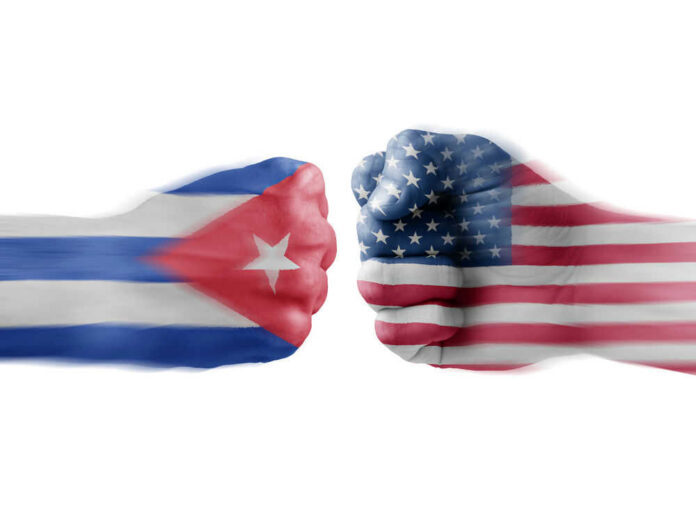
President Trump’s “friendly takeover” line has suddenly turned decades of Cuba policy into a high-stakes test of how far U.S. power can go without firing a shot.
Quick Take
- Trump says the U.S. is in high-level talks with Havana, led by Secretary of State Marco Rubio, and he floated a “friendly takeover” scenario.
- Cuba’s fuel and economic crisis deepened after Venezuela’s oil lifeline was cut off following Nicolás Maduro’s January apprehension, and U.S. pressure escalated with an oil blockade and tariff threats.
- A deadly speedboat clash involving a U.S.-registered vessel added tension as Washington says it is investigating, and Cuba confirmed communications.
- A White House executive order labeled Cuba a U.S. national security threat, raising the stakes for regional partners and third-party oil sellers.
Trump’s “Friendly Takeover” Remark Signals a New Phase in Cuba Talks
President Donald Trump made the “friendly takeover” remark on February 27, 2026, during comments to reporters outside the White House as he departed for Texas. Reporting indicates the administration is holding high-level discussions with Cuban leaders, with Secretary of State Marco Rubio leading the talks.
Trump described Cuba as a “failed nation,” pointing to shortages of money, oil, and food while suggesting negotiations could produce a peaceful transition rather than a military confrontation.
The available reporting does not provide the substance of the negotiations, timelines, or any agreed framework, which leaves the phrase “friendly takeover” open to interpretation. What is clear is that the administration is coupling diplomacy with maximum economic leverage.
For U.S. voters who remember the Obama-era détente, the contrast is stark: Trump is publicly tying talks to tangible pressure and framing the outcome as a potential political end-state.
Oil Blockade, Tariff Threats, and Maduro’s Removal Drove the Fuel Crisis
Cuba’s immediate vulnerability stems from energy dependence. Reports say Venezuela’s oil shipments to Cuba halted after Nicolás Maduro was apprehended by U.S. authorities in January 2026, severing Havana’s primary supply line.
Trump then signed an executive order in late January declaring Cuba a national security threat and threatening tariffs on countries that sell oil to the island, a move designed to discourage third-party workarounds and intensify scarcity.
NOW – Trump: "We could very well end up having a friendly takeover of Cuba." pic.twitter.com/xByy596J1j
— Disclose.tv (@disclosetv) February 27, 2026
By late February, reporting described the crisis as paralyzing daily operations across Cuba, including transport disruptions and halted public services such as garbage collection.
A United Nations official warned on February 26 that humanitarian consequences were “deepening by the day,” underscoring that fuel shortages quickly cascade into food distribution, medical logistics, and basic municipal function. The sources also note disputes around whether any limited Venezuelan oil has been permitted to reach private Cuban sectors.
The Speedboat Shootout Raised the Temperature Around an Already Volatile Standoff
Tensions spiked on February 25 when Cuban border guards killed four people and injured six others on a U.S.-registered speedboat. Reports describe the vessel as allegedly carrying armed anti-government Cubans, and the incident triggered both diplomatic friction and security questions.
U.S. reporting indicates Washington is investigating, while Cuba confirmed communications with U.S. officials after the clash, even as public rhetoric remained sharp.
Incidents involving exile-linked activity have a long history in U.S.-Cuba relations, and this episode landed right as the administration was tightening the economic vise. In practical terms, the clash makes any negotiation harder by raising the risk of escalation and miscalculation.
At the same time, it strengthens the administration’s argument that instability near U.S. shores is not an abstract concern when cross-border actions can turn deadly.
What the White House Order Changes—and What It Doesn’t
The White House executive order that labeled Cuba a national security threat is central because it frames the pressure campaign as defensive rather than merely ideological. That designation provides a policy basis for stronger restrictions and for using tariffs to pressure third countries considering oil sales.
For conservatives wary of globalist double standards, this approach is a reminder that Washington can still use sovereign tools—borders, trade, and sanctions—to pursue clear national objectives.
Trump reiterates threat of a 'friendly takeover' of Cuba as fuel crisis deepens https://t.co/gpkLeUA7kZ
— CNBC Politics (@CNBCPolitics) March 10, 2026
Reporting also reflects pushback. A letter from U.S. civil society groups urged Congress to reverse aspects of the policy to avert collapse, and Cuban officials characterized the embargo as collective punishment.
Those objections highlight the core tension: the administration is using leverage to force political change while critics warn about humanitarian damage. With limited public detail on negotiations, the measurable facts remain the blockade, the tariff threat, the national-security designation, and confirmed high-level talks.
Sources:
Trump: I want ‘friendly takeover’ of Cuba
Trump raises the possibility of a ‘friendly takeover of Cuba’ coming out of talks with Havana
President Donald Trump floats ‘friendly takeover’ of Cuba
Addressing Threats to the United States by the Government of Cuba