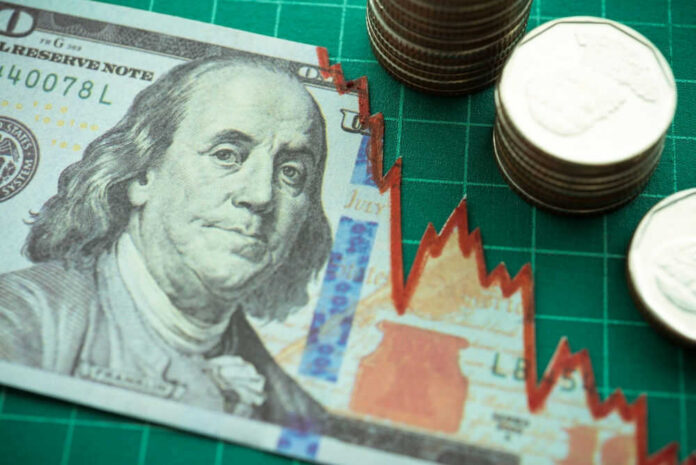
The stock market is partying like it is 1999 while two-thirds of Americans quietly push their shopping carts back into the aisle and put things back.
Story Snapshot
- Two out of three Americans say they are cutting back spending because of higher prices, even as stock indexes hover near record highs.
- Gas and grocery costs, not stock charts, are driving how families behave with their wallets.
- Survey “cutbacks” tell a different story than official spending data, exposing a deep split between Wall Street and everyday life.
- This gap reflects an economy that looks strong on paper but feels fragile at the kitchen table.
The stock market boom that most households do not feel
U.S. stock indexes sit near record highs, fueled by technology profits, easing interest rates, and investors betting that inflation will slowly cool and growth will hold.[4]
Gains in the Dow Jones Industrial Average and the Standard and Poor’s 500 index make headlines and pump up retirement-account balances for Americans who own stocks.[4]
Yet that wealth effect mostly touches higher-income households, because stock ownership is heavily concentrated among the top slice of earners rather than across the broad middle.
U.S. consumer confidence slipped in May as war-driven inflation weighed on Americans: Two-thirds of Americans say they are cutting back on spending as gas prices and food costs stay elevated https://t.co/V99GPaDDao
— Quartz (@qz) May 26, 2026
While investors celebrate, survey evidence on Main Street shows something more sobering. The Conference Board reports that two-thirds of consumers now say they are cutting back on spending overall due to rising prices.[4]
An American Broadcasting Company report on the same survey notes that consumer confidence slipped in May as gas prices stayed high and inflation remained elevated, even as stock prices hovered near record levels.[1]
The headline number is not a rounding error; it signals widespread pressure on household budgets.
What “cutting back” really means for everyday Americans
The same Conference Board questions show how this belt-tightening looks in practice. Most of those who report cutting back say they are buying fewer items, delaying larger purchases, and planning to economize on nonessential categories such as clothes, shoes, hobbies, toys, and games.[1][4]
That pattern matches other polling that finds substantial shares of Americans driving less, trimming household expenses, and delaying discretionary purchases as prices bite into paychecks. These are classic defensive moves when families feel their dollars will not stretch as far as they used to.
Inflation explains much of this shift. The Conference Board notes that rising prices have become the primary reason consumers say they are changing their spending habits.[4]
Separate coverage emphasizes that soaring gas and food costs have outpaced average paycheck growth, eroding purchasing power for many households.[5]
When fuel, groceries, and rent absorb more of consumers’ income, they make trade-offs that rarely show up on Wall Street earnings calls: skipping a vacation, stretching shoes one more season, or waiting another year to replace a car.
Surveys, hard data, and the split-screen economy
Sentiment surveys occupy an awkward place in the economic conversation. The Conference Board finding that two-thirds are cutting back is self-reported behavior, not a direct measure of government-tracked consumer spending.[4]
Official data often show that total consumer outlays continue to rise in nominal terms, supported by wage growth and population gains, even as people tell pollsters they are pulling back.
Other research echoes this “resilient but cautious” picture. A recent bank-sponsored survey finds that consumers are still spending today but are increasingly worried about tomorrow.[2]
Many expect the economy to worsen and inflation to remain a top concern, and they say they plan to focus more on essentials like groceries, gasoline, and household items while trimming discretionary categories such as apparel and travel.[2]
That behavior resembles a family that keeps the lights on and the pantry stocked but stops splurging, which is hardly the portrait of a confident boom.
The political narrative: prosperity headlines versus paycheck reality
Media and political leaders often point to strong stock performance as proof that “the economy is great,” but polls show that many Americans do not buy that narrative.
Coverage of the affordability crisis highlights how rising gas prices, conflict-driven energy shocks, and higher costs across the supply chain strain ordinary households.
Another report notes that a growing share of Americans say they are cutting back on purchases and explicitly blame renewed inflation and national leadership for their hardship. That perspective aligns with skepticism toward ruling-class cheerleading that ignores kitchen-table math.
Common sense says an economy cannot be judged solely by indexes on a trading screen. A healthy system should reward work, allow families to save, and keep basic necessities within reach.
When two-thirds of consumers report cutting back because of high prices, while stock markets soar and political leaders tout success, the message from voters is clear.
The financial markets may be thriving, but many Americans feel the foundation beneath their daily lives is far less stable than the headlines suggest.
Sources:
[1] Web – As US stock market hits new highs, 2 of 3 Americans are cutting back …
[2] Web – Most Americans Are Cutting Back on Spending as Consumer …
[4] Web – Consumer confidence steady, but Americans say they’re cutting …
[5] Web – US Consumer Confidence – The Conference Board