
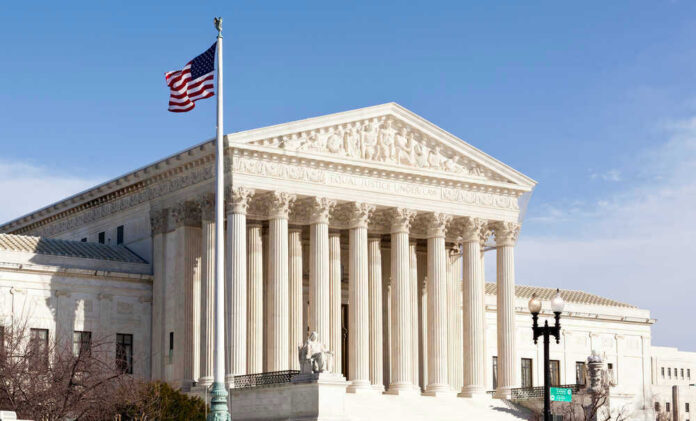
The Supreme Court’s green light for the Trump administration to revoke billions in NIH grants tied to DEI and “gender ideology” marks a seismic pushback against the progressive agenda.
The ruling has energized conservatives while triggering outrage across leftist academic and scientific circles.
Story Snapshot
- Yesterday, the Supreme Court upheld the Trump administration’s cancellation of NIH grants linked to DEI and health equity, halting over $3 billion in research funding.
- White House defends move as protecting taxpayer dollars from supporting “woke” and politically-driven research deemed contrary to administration values.
- The research community faces major disruption, with thousands of projects suspended and fears of lasting damage to US scientific leadership.
Supreme Court Endorses Administration’s Authority to Cancel DEI Grants
The Supreme Court’s 5–4 decision empowers the Trump administration to move forward with its cancellation of National Institutes of Health (NIH) grants referencing diversity, equity, inclusion (DEI), health equity, vaccine hesitancy, and related topics.
The administration frames this sweeping action as a necessary step to align federal spending with the president’s priorities, emphasizing that taxpayer dollars should not fund what it labels as ideological or activist-driven research.
The ruling immediately froze over $3 billion in biomedical research funding and sparked lawsuits from universities and public health organizations.
Citing a need to “restore neutrality” in science funding, the White House directed the NIH to halt all reviews, meetings, and external communications, effectively suspending 80% of its $47-billion budget.
The NIH’s new leadership, installed by President Trump, rapidly moved to ban future grants to universities with DEI programs and reclassified many grant-making staff as political appointees, consolidating control.
Harvard University and other major institutions responded with high-profile lawsuits, arguing the administration’s actions violated federal law and threatened scientific independence.
Legal and Political Showdown over Federal Research Funding
Legal challenges escalated quickly, with a federal judge rebuking the administration’s grant cancellations as “arbitrary and capricious.” Despite the court’s criticism, the administration appealed, maintaining the suspension of thousands of research projects.
Advocacy groups, including the American Public Health Association, joined legal efforts to restore funding and defend research autonomy.
The administration counters that eliminating funding for DEI and health equity projects is essential to prevent government overreach and to stop what it calls the politicization of science.
Meanwhile, the NIH faces the risk of losing already-awarded funds due to slowed spending, with billions potentially returned to the Treasury.
The policy shift has created widespread uncertainty in the scientific community, especially among early-career researchers and those working on sensitive topics. Many projects remain in limbo, with only a handful temporarily restored by court order.
The administration’s allies argue that this is a long-overdue correction to years of “woke” excess and fiscal irresponsibility, while critics warn of lost innovation and diminished US leadership in biomedical science.
The debate has intensified divisions over the proper role of government in research, the limits of executive power, and the defense of constitutional and conservative values.
Ripple Effects and Conservative Response
For many conservatives, the Supreme Court’s decision and the administration’s decisive actions represent a long-awaited victory against bureaucratic overreach and leftist agendas that have dominated federal agencies.
The move is seen as restoring accountability and pushing back against policies that, in the view of many, have eroded traditional values, promoted divisive identity politics, and wasted taxpayer money.
Industry experts and liberal public health leaders, however, warn of cascading effects: billions in lost investment, disruption to patient care and medical innovation, and a chilling effect on future research.
International partners have voiced concern about US reliability and collaboration, as the scientific community grapples with the consequences of this unprecedented intervention.
Supreme Court Allows Trump Admin to Revoke DEI-Related NIH Grants https://t.co/Xr8CAOsK2G
— David Burks; 데이비드 벅스; デビッド・バークス; 大卫·伯克斯 (@dburksmlsfd) August 22, 2025
Sources:
Trump Assault on Federal Research Funding
NIH freezes the majority of its budget as Trump officials halt reviews, meetings, and travel
Trump’s first 100 days: Timeline of changes to science and health policy
Odds of winning NIH grants plummet as new policy and spending delays bite
Overview of President Trump’s Executive Actions on Global Health